The College of Engineering and Computing at the University of South Carolina seeks to fill one tenure-track position at a senior rank in computer science and engineering. The position, in conjunction with corresponding positions in electrical engineering and mechanical engineering, is intended to establish a national center of excellence in safety critical systems, especially for aerospace applications. Particular areas of specialization include
software engineering, computational modeling, sensing and control, and condition-based maintenance. Requirements include a Ph.D. in a relevant field and a record indicating exceptional accomplishments and potential for research. Support from the Computer Science and Engineering Department will include low teaching loads, competitive salary, and generous start-up funds. Responsibilities are to establish a research program of national and international prominence, with a dedication to graduate and undergraduate education. Persons joining the program will have significant opportunities and access to world-class university and industrial aerospace facilities and staff across the state of South Carolina.
Safety-Critical Systems are those that manage the infrastructure and technological components of our society, including our transportation systems. They are the systems whose failure can lead to catastrophic events. Aerospace systems are an example of these, and ensuring their safety is a critical problem. It is also a difficult problem, in that aerospace systems are very complex with many interacting parts, all of which must operate correctly over lifetimes that might extend for decades. Solutions to the problem require means to assess the vulnerabilities of a system, determine its state, and decide on the appropriate actions to verify its safety and thus trustworthiness. The College of Engineering and Computing is being proactive by making strategic faculty hires to meet the needs of the aerospace industry. The expertise of the current faculty (i.e., in composite materials, thermo-fluids, structural health monitoring, and future fuels) can partially meet the emerging needs of the aerospace industry. The proposed cluster focusing on Safety-Critical Aerospace Systems complements the current strength while bridging a critical gap in our endeavor to establish USC in the area of aerospace engineering and computing.
Software has become a key part of all complex societal systems on which we have come to rely. Reliance requires trustworthiness, and this can be established only by verifying the software that processes the sensor data obtained for monitoring and controlling societal systems. However, new software engineering techniques are needed for dealing with the complex, distributed, and heterogeneous systems being considered here. The verification of software for such systems is unsolved and amenable to significant innovation: it will be viable as an important research and education area for the foreseeable future. This position will contribute to and benefit from existing research programs in multiagent and service-oriented software within the Computer Science and Engineering Department.
The proposed faculty member in software engineering would contribute substantially and creatively to the analysis, visualization, and automated understanding of the data that is produced by the distributed heterogeneous sensors used to assess the state of an aerospace or other safety-critical system. Software engineering would be synergistic with sensor signal processing and condition-based maintenance: the other proposed hiring areas in this cluster will contribute to ensuring trust and safety, resulting in a creative and transformative use of USC resources and leading to significant improvements to USC's teaching mission and research enterprise.
The Department of Computer Science and Engineering is in the College of Engineering and Computing and offers bachelor's, master's, and doctoral degrees. The Department has 21 full-time faculty (nine of whom are NSF CAREER award recipients), an undergraduate enrollment of 424 students, a graduate enrollment of 88 students, and over $2 million in annual research expenditures. New leadership in the College has made growth of the Department a high priority. The University of South Carolina is located in Columbia, the capital and technology center of South Carolina, and is the comprehensive graduate institution in the state, with an enrollment of more than 25,000 students. For more information, see
our homepage.
Applications must include curriculum vitae, research and teaching plans, and contact information for at least three references. Applications should be submitted electronically to
ClusterSearch@cec.sc.edu. The screening of applicants will begin on May 1, 2011 and will continue until all three positions are filled.
The University of South Carolina is an affirmative action, equal opportunity employer. Women and minorities are encouraged to apply. The University of South Carolina does not discriminate in educational or employment opportunities or decisions for qualified persons on the basis of race, color, religion, sex, national origin, age, disability, sexual orientation, or veteran status.


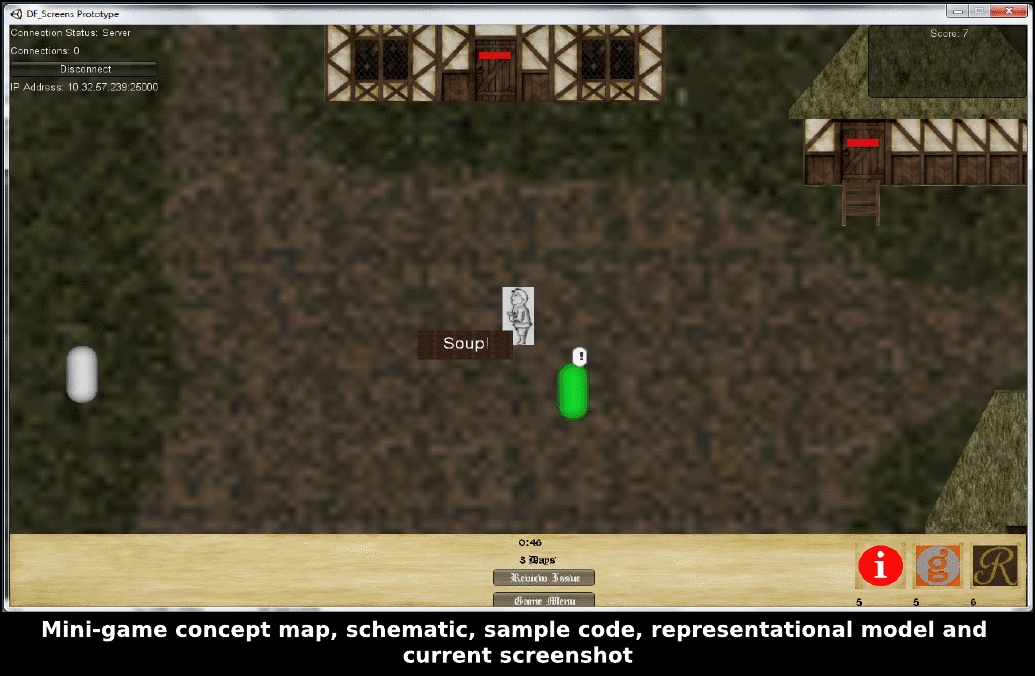 The Free Times newspaper has an article on Desperate Fishwives, an educational game being developed by Dr. Buell, Dr. Heidi Rae Cooley from Media Arts, and their students. The game aims to teach high school and college students the realities of life in a 17th Century English village by having the player take on the role of various village characters.
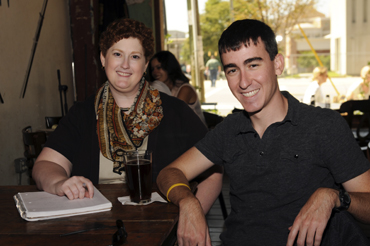

 Dr. Xu, working with Dr. Helmuth from the Biology department, spent her Summer on a beach in Oregon testing wireless sensors that would monitor environnemental conditions. The research is being coverend in local news:

 The College of Engineering and Computing congratulates Alex Burrell on being named the SC Education Lottery Athlete of the Week. Alex is a member of the Gamecock Baseball team, #33 Left-handed pitcher, who recently graduated this May. In his CSCE 492 project he was part of a team programming an Epidemiological Calculator for the iPhone/iPad which is meant to help researchers in the field perform calculations that they would otherwise need to do by hand.
Keep an eye out for #33 at the College World Series in Omaha starting on June 18!
The College of Engineering and Computing congratulates Alex Burrell on being named the SC Education Lottery Athlete of the Week. Alex is a member of the Gamecock Baseball team, #33 Left-handed pitcher, who recently graduated this May. In his CSCE 492 project he was part of a team programming an Epidemiological Calculator for the iPhone/iPad which is meant to help researchers in the field perform calculations that they would otherwise need to do by hand.
Keep an eye out for #33 at the College World Series in Omaha starting on June 18! Our very own Duncan Buell, shown at center on the photo, appeared on this article on the Post and Courier about the voting machines used here in South Carolina. From the article:
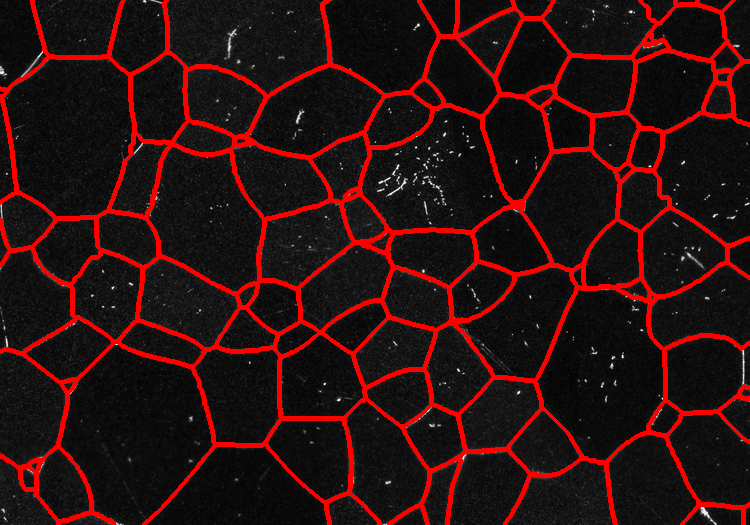
 The fragile regions in mammals’ genomes that are thought to play a key role in evolution go through a "birth and death" process, according to new work by University of South Carolina and University of California-San Diego researchers.
The study, published in the journal Genome Biology, could help researchers identify the current fragile regions in the human genome – information that may reveal how the human genome will evolve in the future.
“We made a step towards understanding the mechanism of genome rearrangements that ‘shuffle’ genomic architectures and represent one of the major driving forces behind evolutionary diversity. In contrast to previous studies, our results allow one not only to analyze the evolution in retrospect but also to predict the future changes in genomic architectures,” said Dr. Max Alekseyev, one of the study’s authors and a computer science and engineering professor in the College of Engineering and Computing at USC. Alekseyev worked with Dr. Pavel Pevzner from UC-San Diego. The two researchers study genomes and genome evolution from a computational perspective.
An important question in evolutionary studies is whether there are "fragile" regions where genome rearrangements are happening over and over again. The fragile regions are prone to “genomic earthquakes” that can trigger genome rearrangements, disrupt genes, alter gene regulation and otherwise play an important role in the evolution and emergence of new species. For example, humans have 23 chromosomes while some apes have 24 chromosomes, a consequence of a genome rearrangement that fused two chromosomes in our ape ancestor into human chromosome 2.
Although nearly all recent studies support the existence of these fragile regions, there have been some doubts about their existence, raised from a comparative analysis of multiple mammalian genomes.
“Our findings imply that fragile regions migrate to different locations in different mammals, and it explains why there are only a few fragile regions shared between different lineages,” said Alekseyev.
The research demonstrates that the fragile regions undergo a birth and death process over evolutionary timescales and provides a clue to where the fragile regions in the human genome are located. The researchers conclude that these regions in the human genome are likely to be affected by the coming genome rearrangements. “We hope that further analysis of the identified fragile regions in the human genome would provide insights into current trends in the human evolution”, said Alekseyev.
The researchers are now working on confirmation of a conjecture that genomic fragility is promoted by matching segmental duplications.
The researchers also hope that their approach may be useful for understanding genome rearrangements at the level of individuals, rather than entire species. In the future, they plan to apply similar analysis for the genome rearrangements that occur within the cells of individual cancer patients in order to develop new cancer diagnostics and drugs.
The fragile regions in mammals’ genomes that are thought to play a key role in evolution go through a "birth and death" process, according to new work by University of South Carolina and University of California-San Diego researchers.
The study, published in the journal Genome Biology, could help researchers identify the current fragile regions in the human genome – information that may reveal how the human genome will evolve in the future.
“We made a step towards understanding the mechanism of genome rearrangements that ‘shuffle’ genomic architectures and represent one of the major driving forces behind evolutionary diversity. In contrast to previous studies, our results allow one not only to analyze the evolution in retrospect but also to predict the future changes in genomic architectures,” said Dr. Max Alekseyev, one of the study’s authors and a computer science and engineering professor in the College of Engineering and Computing at USC. Alekseyev worked with Dr. Pavel Pevzner from UC-San Diego. The two researchers study genomes and genome evolution from a computational perspective.
An important question in evolutionary studies is whether there are "fragile" regions where genome rearrangements are happening over and over again. The fragile regions are prone to “genomic earthquakes” that can trigger genome rearrangements, disrupt genes, alter gene regulation and otherwise play an important role in the evolution and emergence of new species. For example, humans have 23 chromosomes while some apes have 24 chromosomes, a consequence of a genome rearrangement that fused two chromosomes in our ape ancestor into human chromosome 2.
Although nearly all recent studies support the existence of these fragile regions, there have been some doubts about their existence, raised from a comparative analysis of multiple mammalian genomes.
“Our findings imply that fragile regions migrate to different locations in different mammals, and it explains why there are only a few fragile regions shared between different lineages,” said Alekseyev.
The research demonstrates that the fragile regions undergo a birth and death process over evolutionary timescales and provides a clue to where the fragile regions in the human genome are located. The researchers conclude that these regions in the human genome are likely to be affected by the coming genome rearrangements. “We hope that further analysis of the identified fragile regions in the human genome would provide insights into current trends in the human evolution”, said Alekseyev.
The researchers are now working on confirmation of a conjecture that genomic fragility is promoted by matching segmental duplications.
The researchers also hope that their approach may be useful for understanding genome rearrangements at the level of individuals, rather than entire species. In the future, they plan to apply similar analysis for the genome rearrangements that occur within the cells of individual cancer patients in order to develop new cancer diagnostics and drugs.